
Key Takeaway
- ASSB research originated from 1830s and has progressed through decades of material and interface innovation.
- At present, according to TrendForce, global solid-state batteries demand is projected to surpass around 206 GWh by 2030, driven by EVs, aerospace, robotics, and energy storage. This indicates that commercialization is entering an early but structured growth phase.
- Advanced manufacturing solution from LEAD supports the balance of precision, efficiency, and quality required for viable ASSB mass production now and in the future.
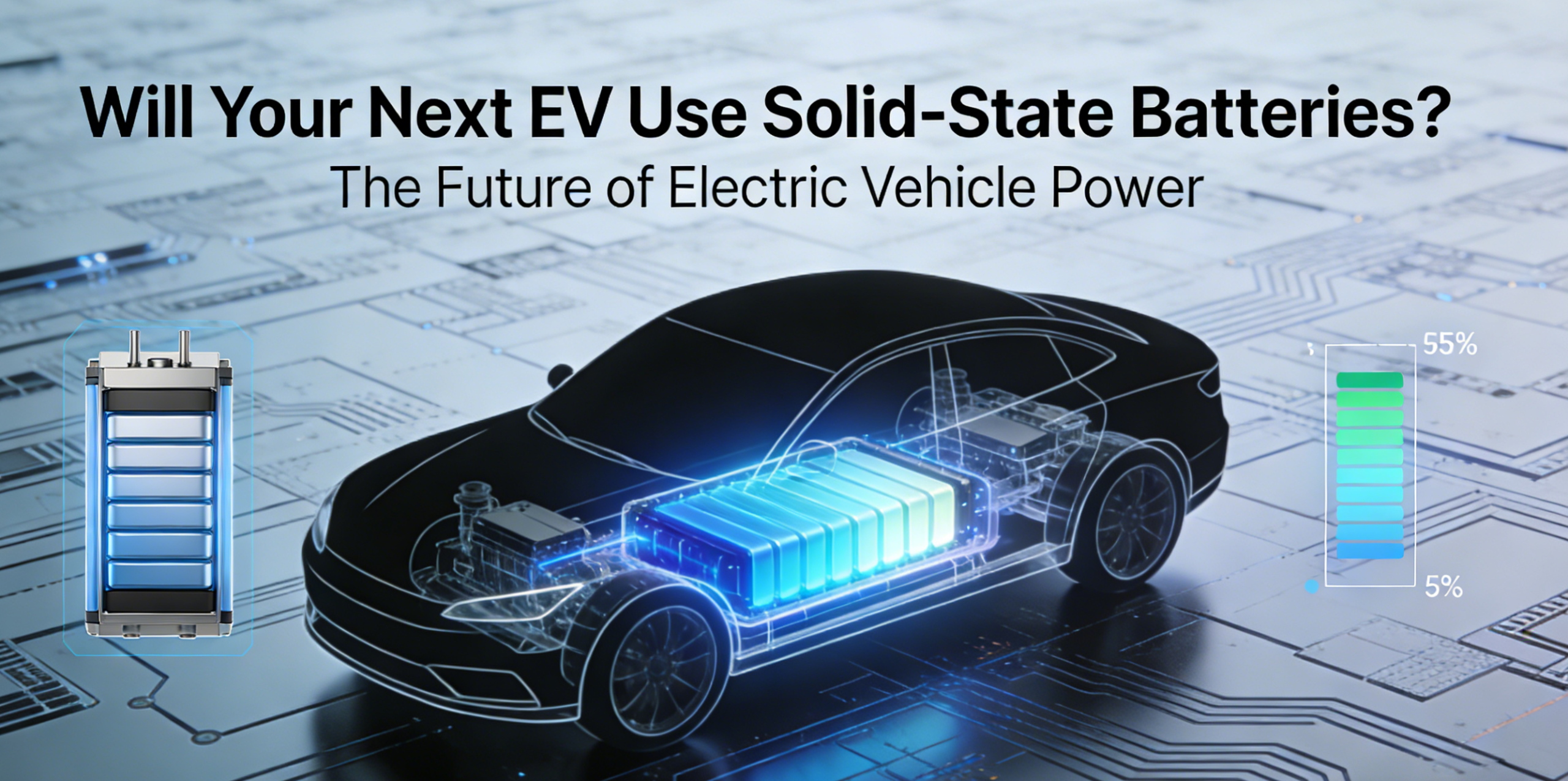
Solid-state batteries are a class of rechargeable cells in which the conventional liquid or gel electrolyte found in lithium-ion and similar chemistries is replaced entirely with a solid electrolyte. In this configuration, both the ion-conducting medium and the electrodes are solid materials, a shift that fundamentally alters how ions travel between anode and cathode during charge and discharge cycles.
This architectural change promises substantially improved safety, energy density, and longevity relative to traditional liquid-electrolyte systems, eliminating flammability risks associated with conventional lithium-based chemistries while enabling potentially higher-voltage operation and greater thermal stability.
From electrified transportation to aviation and portable industrial systems, solid-state batteries have attracted strategic industry investment because their performance attributes align directly with key commercial performance metrics—energy density, lifecycle, and safety. The ability to withstand higher operating temperatures with reduced auxiliary cooling hardware and to resist catastrophic failure modes can materially lower total system cost and design complexity in automotive and aerospace applications.
However, the pathway to commercial deployment has been evolutionary rather than sudden—an extended pursuit grounded in decades of foundational research and incremental innovation rather than a single abrupt breakthrough.
Historical Evolution of Solid-State Batteries — From Concept to Emerging Reality
The development of solid-state batteries did not begin with the recent EV boom. Their origins trace back to fundamental electrochemistry research conducted long before commercial viability was seriously considered.
Early Research and Origins
- The conceptual foundations of what we now call solid-state batteries go back nearly two centuries. Early discoveries by pioneers such as Michael Faraday uncovered solid ionic conductors, including silver sulfide and lead fluoride, in the 1830s, establishing early knowledge of solid electrolytes—materials that enable ion transport without liquid media.
- By the late 1950s and 1960s, breakthroughs such as β-alumina enabled fast ionic conduction for a broader set of ions, catalyzing the development of solid electrolyte-based electrochemical devices. These early systems often faced high internal resistance and limited energy density, but they laid essential scientific groundwork.
- In the late 20th and early 21st century, research institutions and government laboratories expanded foundational research into solid electrolytes and battery chemistries. Notably, NASA’s research programs—such as the Solid-state Architecture Batteries for Enhanced Rechargeability and Safety (SABERS)—investigated solid-state designs for high performance and safety in demanding applications, such as electric aviation. These programs developed advanced lithium-sulfur solid-state chemistries with energy densities significantly above those of earlier prototypes.
Early Commercial Ambitions and Technical Barriers
Commercial interest in solid-state batteries expanded in the 2000s and 2010s as advances in materials science enabled practical exploration beyond laboratory curiosities. One of the first targeted commercial structures was the thin-film all-solid-state battery (ASSB), designed to combine the benefits of solid electrolytes with thin-film manufacturing techniques. Thin-film cells promised improvements in energy and power density, particularly for microelectronics and thin-form-factor applications, although their scalability to high-energy formats remained challenging.
During this period, many companies and research spin-outs emerged with early prototypes and claims of performance advances—such as high volumetric energy densities. These early commercial prototypes often highlighted the theoretical performance and safety benefits of solid electrolytes but faced persistent technical barriers. Primary obstacles included achieving sufficiently high ionic conductivity at room temperature, stabilizing solid-solid interfaces to prevent degradation during cycling, and addressing manufacturing complexities that could support high-volume production without unacceptable cost increases.
Understanding the Present-Day Landscape of Solid-State Batteries
As solid-state batteries gain strategic attention across the energy storage and mobility sectors, the current landscape is defined by diverse technological routes, nascent industrial deployment, early adopters in high-performance applications, and the persistent technical and commercial hurdles. Rather than a single converged solution, today’s ecosystem is pluralistic and in an active phase of translation from lab to pilot production and early application.
Current Technology Status
Today’s development of solid-state batteries does not follow a one-size-fits-all path. Multiple electrolyte systems are concurrently being pursued, each with distinct advantages and constraints:
Oxide solid electrolytes
High stability and safety, but brittle with interface challenges.
Sulfide solid electrolytes
High ionic conductivity and processing flexibility.
Polymer electrolytes
Flexible form factors but lower conductivity at room temperature.
Hybrid systems
Combine inorganic and polymer materials to balance conductivity and mechanical stability.
This reflects a stage of diversification rather than convergence, with strategic material choices influencing manufacturability and performance across use cases.
Industrial Progress and Pilot Lines
The transition from laboratory prototypes to production-oriented lines is underway, but not yet at the scale of conventional lithium-ion manufacturing. Multiple automotive OEMs and battery manufacturers are constructing pilot facilities and early production lines. For example:
- Samsung SDI’s pilot line has been commissioned and is delivering sample cells to customers, with plans to scale up toward mass production in the late 2020s.
Current Major Application
While automotive ASSB integration is developing, the most realistic near-term deployments of solid-state batteries are in aerospace and robotic applications.
- Robotics platforms, including industrial and humanoid robots, are being positioned as promising launch markets for solid-state batteries due to their weight and safety advantages, which are critical for autonomous systems.
- The aerospace sector, especially in emerging urban air mobility and eVTOL (Electric Vertical Take-Off and Landing) systems, is increasingly evaluating solid-state chemistry for higher energy density and safer operation at altitude. According to TrendForce, global solid-state battery demand in low-altitude aviation is expected to grow to about 302 GWh by 2035, with intermediary demand reaching roughly 86 GWh by 2030.
Technical and Commercial Challenges
Despite visible progress, today’s solid-state batteries face both engineering and business-model constraints.
Technical Challenges:
SEI Activation and Interface Engineering
The solid electrolyte interphase (SEI) between the electrolyte and the electrodes remains a critical challenge. Controlling SEI formation and stability is essential to prevent impedance growth and mechanical failure over hundreds of cycles. Development here is central to realizing performance benefits.
Temperature Control and Operation
Some electrolyte classes require strict thermal regimes to maintain high ionic conductivity, raising integration and thermal management demands.
Solid Electrolyte Sensitivity
Solid electrolytes are often sensitive to moisture, pressure, and temperature, complicating manufacturing and long-term stability.
Commercial Challenges:
Beyond electrochemistry, commercialization demands manufacturing discipline. A recurring industry lesson is that advanced specification alone does not ensure viability.
The challenge is balancing:
In other words, the commercial success of solid-state batteries will depend not only on achieving a perceived breakthrough in solid-state battery technology, but also on mastering scalable process engineering.
Over-optimization for peak laboratory performance—without regard to throughput, defect tolerance, and reproducibility—can inflate solid-state battery cost and delay market entry.
Understanding the Future Development of Solid-State Batteries
Looking forward, the trajectory of solid-state batteries points toward staged commercialization, robust market growth, and widening adoption across new sectors. Although technical and manufacturing barriers remain, industry analysts and market forecasts provide a clearer picture of how this technology could progress through the end of this decade and into the early 2030s.
Commercialization Timelines
Industry consensus suggests solid-state batteries will transition from pilot production to broader commercial adoption in the late 2020s, with significant market presence expected beyond 2030. Beaides, multiple automotive and battery manufacturers have set targets for initial deployment or demonstration projects around 2027, particularly in premium electric vehicles and robotics platforms, reflecting an early commercialization phase.
BYD
Confirmed that it plans to begin small-batch production of sulfide-based solid-state batteries in 2027, with initial deployment targeting a demonstration fleet of ~1,000 vehicles in its premium Yangwang brand that year. This rollout is explicitly framed as an early commercial deployment before wider adoption toward 2030.
Xpeng
The Chinese electric vehicle maker announced plans to equip its humanoid robots with solid-state batteries and aims to launch these robots by the end of 2026. The initiative explicitly targets the robotics sector, positioning it as a near-term early adopter of the technology.
Market Growth Projections
The market outlook for solid-state batteries — including materials, cell production, and associated components — illustrates strong projected growth over the next decade:
206 GWh
by 2030
740 GWh
by 2035
30%+ CAGR
through 2020s
- Trend analyses forecast global demand for solid-state batteries to surpass approximately 206 GWh by 2030 and climb toward 740 GWh by 2035, suggesting acceleration in both automotive and stationary storage sectors.
- The segment for solid-state battery materials— including solid electrolytes, interfacial additives, and engineered electrodes — is independently projected to grow sharply, with compound annual growth rates above 30 % through much of the 2020s
Application Expansion Beyond Automotive
While EVs remain a major focal point for solid-state batteries, future adoption is likely to spread into a broader array of industries leveraging their energy density, safety, and longevity benefits:
Renewable Energy Storage
Next-generation grid and distributed storage systems could increasingly integrate solid-state solutions, particularly when safety and long cycle life are prioritized alongside high energy density.
Consumer Electronics and Wearables
Compact, thin-form solid-state cells are attractive for premium devices, tablets, and wearable products where safety and size limitations are paramount.
High-Performance and Niche Sectors
Aerospace, robotics, and other specialized markets are expected to continue adopting ASSBs early — capitalizing on weight savings, operational reliability, and thermal resilience.
By broadening beyond traditional automotive targets, solid-state technology is poised to support multi-sector electrification, from stationary decarbonization to high-end portable systems.
LEAD’s Solid-State Battery Manufacturing Solution: Embracing the Future of ASSB Production
To realize the commercial promise of ASSB, manufacturers must bridge the long-standing gap between laboratory breakthroughs and scalable, high-quality industrial production. LEAD’s solid-state battery manufacturing solution is designed to precisely address this gap, enabling battery producers to achieve balanced performance across precision, quality, and efficiency — three pillars critical for high-value applications such as EVs, aerospace systems, and robotics.
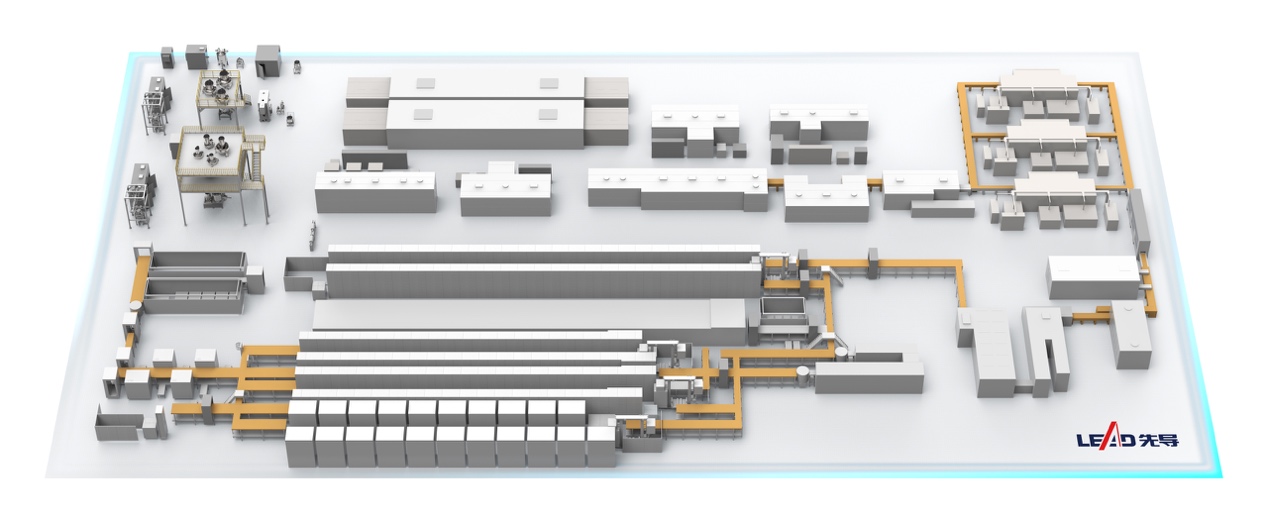
End-to-End Manufacturing Integration for ASSBs
LEAD’s solution offers a comprehensive turnkey production line that spans all core steps of ASSB manufacturing — from solid electrode and electrolyte preparation to assembly, densification, and high-voltage formation and grading. This holistic approach removes traditional barriers that arise when separate process segments are handled in isolation and enables smooth transitions between stages in the production chain.
Key covered stages include:
- Solid-state electrode production
- Solid electrolyte fabrication and lamination
- Cell assembly and densification
- High-pressure formation and final grading
By incorporating all these stages into a unified workflow, LEAD accelerates path-to-market while maintaining stringent control over product quality and repeatability — a fundamental requirement for industrial-grade ASSBs.
Precision Equipment Adapted to ASSB Materials
Manufacturing solid-state batteries poses unique challenges due to the sensitivity and structural requirements of solid electrolytes and electrodes. LEAD’s equipment portfolio is built to meet these challenges head-on:
- Dry Electrode Coating: LEAD’s high-speed dry electrode coating system achieves thickness uniformity of ≤±2 μm with throughput speeds above 80 m/min for anodes and 50 m/min for cathodes — a capability that directly improves material consistency and cell performance.
- Ultra-Thin Electrolyte Production: A specialized process ensures electrolyte layers thinner than 20 μm, a key performance parameter for achieving higher energy density and optimal ionic conduction in ASSBs.
- Mini-Environment Control: Controlled production environments (temperature, humidity, cleanliness) are built into key process modules, eliminating contamination risks that can degrade cell performance and reliability.
These technologies contribute to achieving tight manufacturing tolerances and repeatable cell quality — essential prerequisites for high-performance ASSB products.
Digital Tools that Support Quality Assurance and Scale-up
LEAD’s ASSB solution includes independently developed testing, analysis, and software that support manufacturing in several high-value areas:
- Recipe and process development
- Material evaluation and performance monitoring
- Process verification and quality assessment
These tools help move solid-state electrode processes from laboratory experimentation into consistent large-scale manufacturing — closing one of the key translational gaps that has historically slowed ASSB industrial adoption.
Supporting Industry-Level Scalability
As industries increasingly target GWh-scale ASSB production lines, LEAD’s equipment has been validated to support industrial production with high throughput and defect-reduction capabilities. In field applications, dry electrode mixing and coating solutions have demonstrated capacity levels of 5–8 GWh per line, along with reduced energy consumption and manufacturing cost per GWh — illustrating real industrial scalability.
LEAD’s solid-state battery manufacturing solution blends precision hardware, automated processes, environmental control, and intelligent software into a cohesive industrial platform. By doing so, it enables battery makers to prepare for expanded adoption of ASSB and the time of solid-state batteries.
LEAD’s Latest Stacking Machine for All-Solid-State Cell Making: Enabling High-Speed and Flexible ASSB Assembly
Building on this integrated platform, LEAD has also developed a dedicated all-solid-state battery stacking machine to address the throughput and flexibility requirements of next-generation cell assembly. The system is engineered for high-speed operation, achieving stacking cycle times of around 0.35 seconds per cell while maintaining precise alignment, allowing manufacturers to significantly improve productivity without compromising accuracy. At the same time, its modular equipment architecture enables compatibility with different cell dimensions and evolving solid-state technology pathways, including both sulfide-based and oxide-based systems, giving battery producers greater flexibility as ASSB designs continue to mature.
Conclusion
Solid-state batteries have evolved through years of materials research, interface engineering, and manufacturing experimentation. Rather than a sudden solid-state battery technology breakthrough, their progress reflects cumulative advances in solid-state battery materials, process control, and system integration.
However, large-scale success will depend on more than energy density gains. The decisive factors will be manufacturing precision, yield efficiency, and competitive reliability. In this context, advanced ASSB solutions—such as those developed by LEAD—demonstrate how precision equipment and intelligent automation can enable the viable production of solid-state batteries.
Take a Next Step
"*" indicates required fields